Organic Mattress Construction
Inside an Organic Mattress: How Layering Shapes Support and Feel
The character of a mattress is not found in a single ingredient. It emerges from the way its layers meet: a cushioning surface, a supportive core, and the fabrics that hold everything together. Understanding that architecture makes organic mattress specifications easier to read—and helps distinguish meaningful construction details from attractive but incomplete claims.
Published October 22, 2026
An organic mattress is best understood as a small system rather than a single material. Latex may provide buoyant cushioning; a denser layer beneath it may help distribute weight; wool and cotton can shape the surface, regulate moisture, and form the outer envelope. Each component has a role, but the way the components are arranged is what gives the mattress its particular balance of softness, stability, and responsiveness.
That is why a label such as “latex mattress” tells only part of the story. Two mattresses can both contain latex and feel strikingly different because their layers vary in thickness, firmness, density, and order. Covers, quilting, and the foundation beneath the mattress contribute too. For shoppers, researchers, and anyone curious about mattress technology, reading the construction from top to bottom is a practical way to understand what a product is designed to do.
A mattress is an arrangement, not a material
Think of mattress layering as a conversation between comfort and support. The uppermost surface meets the body first. It may compress slightly around shoulders, hips, and other pressure points, while a deeper core helps keep the body from sinking too far. A cover surrounds the layers and can influence how directly their qualities are felt. The base or bed frame then provides a stable platform for the mattress as a whole.
In an organic latex design, the layers may be made from latex with different firmness levels, sometimes combined with wool and organic cotton in the cover. Other mattress constructions use different foams or materials. There is no universal layer count that guarantees a better mattress, and the word “organic” does not specify how soft or firm the finished bed will feel. Those questions depend on the complete construction.
Rather than assuming that one material or certificate determines comfort, examine the whole specification. Is the top layer thin or substantial? Are the layers described as soft, medium, or firm? Is the core made from the same material as the comfort layer, or does the mattress combine different materials? Can the layers be rearranged or replaced? Clear answers turn a list of ingredients into a useful picture of how the mattress is built.
The comfort layer: first contact, lasting impression
The comfort layer is the upper part of the mattress construction, where pressure relief and surface feel are especially noticeable. In a latex mattress, this layer may have a soft, medium, or firmer feel. A softer latex layer generally yields more readily under pressure; a firmer layer resists compression more strongly. But firmness is not a standalone measure of comfort. A person’s size, sleeping position, preferences, and the layers below all change how the surface feels in practice.
Thickness matters because a comfort layer has to work in partnership with the support layers beneath it. A deeper cushioning layer may allow more contouring before the body meets firmer material below. A shallower one may create a more immediate, buoyant sensation. Neither approach is automatically preferable. The important question is whether the combined construction offers a comfortable balance for the sleeper, rather than a particular number of inches in isolation.
Latex is often described as responsive: it compresses under weight and recovers its shape when pressure is removed. That quality can contribute to a buoyant, less enveloping feel than materials that respond more slowly. The experience still depends on the latex formulation, firmness, shape, and surrounding layers. A mattress specification should ideally make clear what material is used in each layer and how it is configured, rather than relying on broad descriptions such as “natural comfort.”
The support core: structure beneath softness
Under the comfort surface, deeper layers help carry the sleeper’s weight and limit excessive compression. In an all-latex mattress, the core may consist of one or more latex layers chosen for greater firmness. In other designs, the support structure may be made from a different material or a combination of materials. The architecture matters because a soft surface over a supportive core can feel very different from a uniformly soft mattress.
Layer order also shapes the experience. A firmer layer near the base can provide a stable foundation, while a softer layer at the top can add cushioning. If a mattress contains several interchangeable layers, rearranging them can alter the feel without changing the materials themselves. Even when the same three firmness options appear in two builds, their sequence can shift how readily the surface compresses and how quickly firmer support becomes noticeable.
It is useful to treat terms such as “alignment” and “support” as descriptions of design goals, not guarantees of medical benefit. A mattress should feel comfortable and stable to the person using it, but a product description alone cannot predict outcomes for every body or address a health condition. For persistent pain or other medical concerns, seek advice from a qualified health professional rather than relying on bedding claims.
Thickness, firmness, and why they work together
Mattress thickness is an easy specification to notice, but it does not reveal how a mattress will feel by itself. A taller mattress might include several comfort and support layers, a deep quilted cover, or a combination of both. A thinner mattress could still contain a carefully chosen arrangement. Comparing total height without examining layer-by-layer details is like judging a garment by its length alone: useful as a measurement, but not enough to understand its design.
Firmness labels are similarly relative. “Soft,” “medium,” and “firm” are helpful shorthand when comparing layers within one product range, but manufacturers may use these terms differently. They do not replace the materials, dimensions, or configuration details. If a mattress offers adjustable layers, ask whether the firmness labels refer to individual components or the assembled mattress. The distinction can make the specification much easier to interpret.
Body weight and sleeping position influence how the layers are experienced. A side sleeper may notice pressure at the shoulders and hips differently from a back sleeper; someone who prefers a more level surface may want a different balance again. Partners may have contrasting preferences, and some mattresses allow different configurations on each side. These observations are not a universal formula for choosing firmness, but they explain why a single showroom impression or rating cannot define comfort for everyone.
Talalay and Dunlop: two latex processes, distinct options
Latex can be produced using different manufacturing methods, including Talalay and Dunlop. Both are used in bedding, but the process and resulting foam characteristics can differ. Talalay production includes additional steps that create a more uniform structure, while Dunlop latex is produced through a different foaming and curing process. Those distinctions may affect the feel and construction choices available, but the process name alone does not tell you whether a mattress will suit you.
When comparing latex mattress construction, look beyond the method label. Ask what type of latex appears in each layer, whether the material is natural, synthetic, or blended, and what firmness options are offered. If a specification uses the word “organic,” check what precisely is certified: the latex, the textile cover, or another component. Manufacturing terminology is most useful when it is paired with transparent information about materials and the finished mattress.
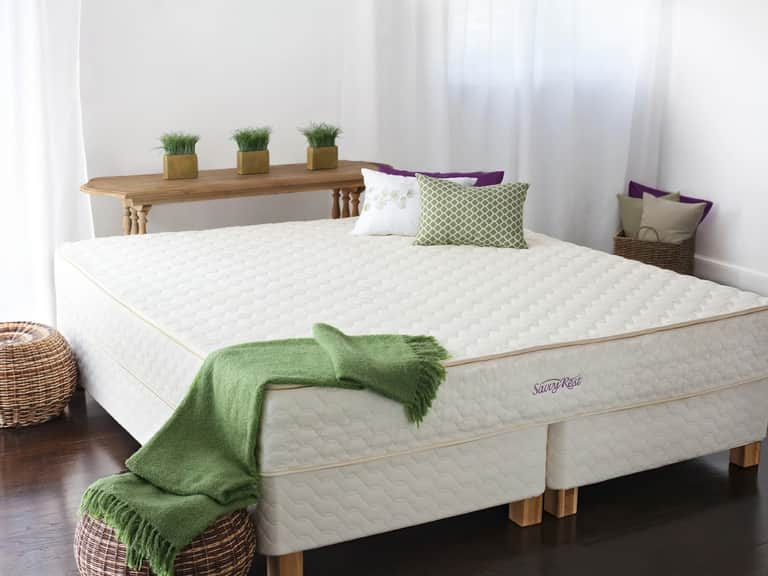
A customisable example is the Savvy Rest Serenity Latex Mattress, which is described as a three-layer design with soft, medium, or firm Dunlop and/or Talalay latex options. Its organic cotton casing is quilted with wool, and its layer arrangement can be selected to change the overall feel. This is a product-specific illustration of how layer selection affects construction, not a universal template or endorsement of a particular configuration.
The cover: more than a finishing touch
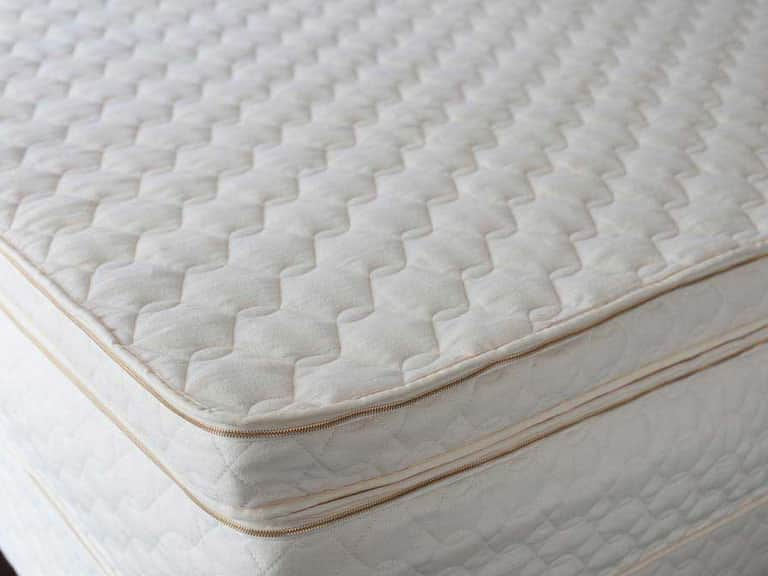
The outer cover frames the mattress and can contribute to its first impression. Organic cotton is used in many bedding textiles for its soft hand and familiar, breathable feel. Wool batting may be quilted into some covers, where it adds a cushioned surface and can help manage moisture. The exact effect depends on the cover’s thickness, weave, quilting, and the materials beneath it.
Because a cover sits between the sleeper and the internal layers, it can subtly change how those layers are perceived. A more substantial quilted surface may soften the initial feel; a closer-fitting cover may allow the latex’s responsiveness to come through more directly. Covers can also be removable or fixed, and their care requirements vary. Check the manufacturer’s instructions before washing or spot-cleaning, since latex and textile components may need different treatment.
Wool is sometimes used in mattress construction as part of a flame-resistance strategy, while regulations and product designs vary. The role of any component should be confirmed in the product’s documentation rather than inferred from a general material description. Similarly, a natural or organic textile claim is not a substitute for asking about the full composition of the cover, including any stitching, backing, or other components.
Airflow and temperature: consider the whole build
People often ask whether a particular mattress sleeps cool. Temperature comfort is influenced by more than the name of the foam. The material’s structure, layer thickness, cover, bedding, room conditions, and individual sleep habits all play a part. Latex is often described as breathable because its foam structure can contain spaces that permit air movement, but that does not mean every latex mattress will feel cool to every sleeper.
Wool and cotton can influence moisture management and surface sensation, while a mattress protector and sheets add further layers between the body and the mattress. Dense quilting or a thick protector may change the feel and airflow at the surface. If temperature is a priority, examine the complete sleep setup rather than expecting a single ingredient to determine the result. Product claims about cooling are best read as descriptions to investigate, not guarantees of an individual experience.
Certifications: what the label covers
Organic mattress claims can refer to different parts of a product. A certification may apply to the latex, the cotton cover, the wool, or a production process. Before drawing conclusions, identify the exact standard, the component it covers, and whether the certification applies to the finished product or only to specific materials. Certification names can be meaningful, but they are not interchangeable and do not independently describe comfort, durability, or suitability.
For example, GOLS is associated with organic latex, while GOTS applies to organic textile processing and products within its scope. A product may also refer to other material or environmental standards. The careful shopper reads the certification details alongside the construction specification and confirms that claims are supported by documentation. If a product page does not explain which components are certified, ask the manufacturer or retailer for clarification.
Certifications also have limits. An organic claim does not, by itself, establish that a mattress is free of every substance a buyer might wish to avoid, nor does it determine how a mattress will perform over time. The most informative assessment combines component-level certification details with transparent material descriptions, warranty terms, care guidance, and a clear account of the layers.
A practical way to read a mattress specification
Start with a simple top-to-bottom inventory. Note each layer’s material, thickness, and firmness, then identify what surrounds those layers. If the construction is adjustable, find out which pieces can be moved or replaced, and whether the configuration differs by side of the bed. This approach reveals more than a broad label such as “natural mattress” or a total height measurement.
- Identify every layer: Look for a description of the comfort surface, intermediate layers, and support core.
- Check the dimensions: Compare the thickness of individual components as well as the total mattress height.
- Clarify firmness language: Ask whether labels describe individual layers or the assembled mattress.
- Read material claims carefully: Distinguish natural, organic, synthetic, and blended materials where the information is available.
- Review the cover: Note its fiber content, quilting, removability, and care instructions.
- Verify certification scope: Confirm which material or component each certification covers.
- Understand the policies: Check warranty coverage, trial or exchange terms, and any layer-replacement conditions.
- Consider the foundation: Confirm that the mattress is compatible with the bed base you plan to use.
Customisable layers and the value of adjustment
Some mattresses allow the sleeper to choose or rearrange layers. This can make the construction more adaptable, particularly when preferences are uncertain or two people sharing a bed want different feels. It also introduces practical questions: Are layer exchanges permitted? Is there a time limit? Does the policy cover a change in firmness, a different material, or both? Is the mattress designed for different configurations on each side?
Customisation should be understood as an option for tuning the feel, not a promise that every configuration will suit every sleeper. Layer changes may require lifting and handling substantial components, and the mattress cover may need to be opened and reassembled correctly. Clear instructions and a well-defined exchange policy are part of the construction story because they determine how usable the design is after delivery.
For couples, independent sides can be especially relevant when comfort preferences differ. A split configuration may allow each person to select a distinct arrangement while sharing a single mattress cover. The details depend on the mattress model and size, so confirm the exact options available rather than assuming that every adjustable mattress supports separate sides.
Durability and care begin with the details
Layered construction can make maintenance more involved than simply rotating a one-piece mattress, but it may also make individual components easier to access. Follow the care guidance supplied for the specific mattress. Latex should generally be protected from prolonged direct sunlight, and wet cleaning may be inappropriate for the latex itself. Covers and protectors may have separate washing instructions.
Ask whether the mattress is designed to be flipped, rotated, or used on an adjustable base. A layered mattress may have a designated top and bottom, which means turning it over is not necessarily appropriate. The warranty should explain what is covered and any requirements for a suitable foundation, regular care, or proof of purchase. A longer stated warranty is not a complete measure of expected lifespan; its exclusions and remedy terms matter as much as its duration.
Durability also depends on how materials are assembled and supported. A cover that holds layers in position, a suitable foundation, and careful handling all contribute to the life of the sleep system. No material can guarantee performance for a fixed period under every condition, so it is sensible to assess the construction, warranty, and care requirements together.
Common misunderstandings about organic mattress layering
“More layers always mean more comfort.” Layer count alone does not establish quality. A well-considered construction may use fewer components, while a more complex mattress may offer additional adjustment or distinct functions. What matters is how the layers work together and whether their specifications are clear.
“Organic means one particular feel.” Organic describes a sourcing or processing claim within the scope of a standard; it does not define firmness. Organic mattresses can be soft, firm, or somewhere between, depending on their materials and arrangement.
“Latex is latex.” Latex products can differ by manufacturing method, formulation, firmness, and whether the material is natural, synthetic, or blended. A useful description identifies the type and location of latex in the mattress, rather than using the word as a complete explanation.
“A thick mattress is automatically more supportive.” Height is not a substitute for knowing the core construction. A taller profile may reflect additional cushioning, quilting, or support layers, and its suitability depends on the entire build.
“A certification tells me everything I need to know.” Certification can substantiate specific material or process claims. It does not replace information about layer thickness, firmness, cover construction, care, or warranty terms.
Questions worth asking before choosing
When specifications leave something unclear, focused questions can turn a product page into a more complete picture. Ask what each layer is made of and how thick it is. Find out whether firmness ratings are comparative within the product range, and whether the mattress can be adjusted after purchase. If a product carries an organic claim, ask which components are certified and what documentation is available.
It is also useful to ask how the cover is constructed, whether it can be removed, and which parts can be cleaned. Clarify the mattress’s foundation requirements and whether it is compatible with an adjustable base. Finally, read the exchange and warranty terms before deciding that customisation or a trial period will resolve every uncertainty. The best answers are specific, consistent, and easy to verify.
A more informed view of mattress construction
Understanding mattress layering is less about finding a perfect formula and more about learning how design choices translate into experience. The comfort layer influences the first impression; deeper layers shape how the mattress responds under load; and the cover, foundation, and care requirements complete the picture. Material names matter, but so do thickness, firmness, sequence, and the evidence behind certification claims.
For organic mattresses in particular, thoughtful evaluation means separating material sourcing from performance. Organic cotton, wool, and latex may be part of a carefully documented construction, but no label can predict an individual’s comfort on its own. Read the details layer by layer, consider how the complete system fits your needs, and ask for clarification wherever a specification is vague. That is how a mattress stops being a list of appealing ingredients and becomes a design you can understand.